
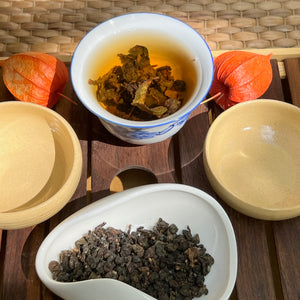


Alishan GABA oolong – silky calm from the Alishan mountains
A GABA specialty made from oolong leaves grown on the slopes of Alishan (Chiayi County, Taiwan) at an altitude of 1,000–1,800 meters. Amber, round and soothing – for evening relaxation, deep conversations and “breathing” breaks.
Origin & processing
The GABA oolong is unique in that it is exposed to an oxygen-free, nitrogen-saturated environment during a stage of oxidation. This naturally results in higher levels of γ-aminobutyric acid (GABA) in the leaves, while maintaining the silky body and clean finish typical of oolongs. The cool, foggy microclimate of the Meishan area and the large daily temperature fluctuations support the development of honeyed, fruity aromas.
Taste and aroma profile
- Aroma: honey, brown sugar, toasted grain, dried apricots
- Taste: baked pear, vanilla-cocoa nuance, sweet potato, date-fig sweetness
- Body & Feel: full, oily texture; smooth, round mouthfeel
- Finish: long, lingering, warm, slightly spicy (cinnamon/licorice) aftertaste
When do we recommend it?
For evening teas, rainy days, focus and relaxation. A “comfort oolong” that combines the warmth of roasted oolongs with the soft peace of GABA teas.
Preparation instructions
Asian (gongfu) method
- Equipment: gaiwan/hohin or small jug (90–120 ml)
- Tea: 5–6 g
- Water: 90–95 °C (soft water is preferred)
- Process: short rinse optional; 1st–2nd pour 15–20 sec, then gradually increase (25–40 sec, later 60+ sec)
- Tip: Fruitier at 90 °C, honey-roasted notes become stronger at 95 °C. You can expect 6–8 pours.
Western method
- Equipment: 300–350 ml teapot or cup with strainer
- Tea: 3–4 g
- Water: 90–95 °C
- Soaking time: 2:30–3:30 minutes; 1–2 shorter infusions can be made from the same batch
Cold brew
- Ratio: 8–10 g/liter
- Water: chilled, soft water
- Time: 8–12 hours in the refrigerator; strained, pear-vanilla, silky drink with low bitterness
Tips & pairing
- Food pairing: buttery biscuits, nutty cakes, soft cheeses (brie/camembert), 60–70% dark chocolate
- Storage: airtight, away from light and odors; fresh roast notes are most vibrant for 3-6 months
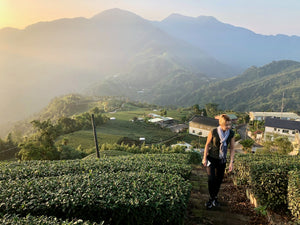
Personal contact
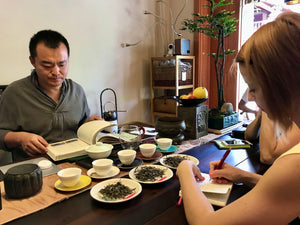
Our teas don't come from wholesale warehouses or unknown sources. We travel to the small producers we source from – whether it's a Japanese family tea garden, a Chinese mountain village or an oolong maker in Taiwan.
Stories
We meet them in person, learn their story, see how they care for their plants, and how they process the fresh leaves.
These experiences are the soul of our teas. This way, not only is the quality guaranteed, but also the fact that behind each cup there is a real person, a real story.
Direct
This direct relationship is valuable to us. Not only because of the excellent tea, but because we believe that trust, respect and personal presence are what make the tea drinking experience truly special.
Teavolution Tea Blog

Shincha - Japan's First Tea of Spring
Read more

What is shading in Japanese tea? | Matcha, Gyokuro, Kabusecha
Read more

Oct 2, 2025
Sencha tea
Read more
Sep 21, 2025
Matcha shortage in Japan
Read more
Mar 18, 2025
Puer tea, puerh or pu-erh
Read more
Mar 18, 2025
Types of tea
Read more
