

Dark Depth, Velvety Calm
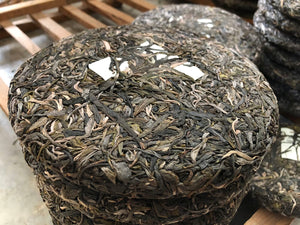
The 2018 Lao Tong Zhi loose leaf shu puer showcases the warm and comforting world of well-prepared, aged shu teas. Its brew is a deep reddish-brown, with a smooth and full texture, and its flavor features delicate notes of dark cocoa, dried fruits, and damp wood, all meeting with a lingering, soft sweetness.
It’s not loud, it doesn’t try to impress at all costs. It unfolds quietly, then reveals an increasingly deep and rounded character. It's a tea to return to at the end of a long day, in cool weather, after a meal, or simply when you crave something warm and grounding. It’s also an ideal, protective companion in the morning.
The Subtlety of Aging
The tea was produced in 2018 and then stored under natural conditions in the climate of Guangzhou. Over the years, the younger, rawer notes of fermentation have further softened: the brew has become more velvety, and the flavor profile more uniform and mellow.
The deeper, earthy-woody base is softened by hints reminiscent of dark cocoa and dried fruits. A delicate sweetness lingers at the end of each sip, gradually becoming clearer and lighter with subsequent infusions.
The Legacy of Haiwan Tea Factory
Lao Tong Zhi – meaning “Old Comrade” – is the most famous brand of Haiwan Tea Factory. The factory was founded in 1999 by Zou Bingliang and Lu Guoling, who brought decades of puer tea-making experience from the renowned Menghai Tea Factory.
Haiwan shu puer teas are generally characterized by balanced fermentation, a full yet smooth texture, and a recognizable, classic puer character. This loose leaf batch is an easy-to-prepare, everyday-lovable version of this tradition.
Flavor Notes
- dark cocoa
- dried fruits
- damp wood and subtle earthiness
- slightly nutty, roasted undertones
- soft, lingering sweetness
Who do we recommend it for?
It’s a good choice for those looking for a classic, dark, and velvety shu puer tea for daily consumption. Its rounded, less bitter character makes it approachable for those new to the world of puer, while also offering a pleasant, calm tea experience for lovers of aged shu teas.
The loose leaf format is particularly practical: there’s no need to break the tea off a cake or brick, it's easy to portion, and quickly reveals its full flavor profile even in the first infusions.
Preparation in Gongfu style
Tea quantity: 5–7 g / 100–120 ml
Water temperature: 95–100 °C
First step: one or two short rinses, 5–10 seconds each
Infusions: initially 10–15 seconds, then gradually increased
The tea can be steeped through multiple infusions. The first cups are darker, more chocolatey, and fuller-bodied, while in later infusions, wood, dried fruit, and pure sweetness come increasingly to the fore.
Western style

Shincha - Japan's First Tea of Spring
Read more

What is shading in Japanese tea? | Matcha, Gyokuro, Kabusecha
Read more

Oct 2, 2025
Sencha tea
Read more

Sep 21, 2025
Matcha shortage in Japan
Read more
Mar 18, 2025
Puer tea, puerh or pu-erh
Read more
Mar 18, 2025
Types of tea
Read more
