


Bai Mu Dan 2022 – Wuyishan fehér tea 白牡丹
Tax included
Shipping calculated at checkout
A Bai Mu Dan neve „Fehér bazsarózsát” jelent. Ez a 2022-es szüretű tétel a Wuyi-hegység Tongmuguan vidékéről, Guwankengből származik, mintegy 1000 méteres magasságból. A leveleket helyi Qun Ti Zhong teafákról szedték, amelyek legalább 80 évesek.
Feldolgozása a fehér teák hagyományos napoztatására épül, amelyet finom, kézi rázással egészítenek ki. Ez a kíméletes lépés enyhe oxidációt ad a teának, és mélyíti természetes aromáit. Érlelés után a leveleket lazán, kézzel préselték mini korongokká. Egy korong nagyjából 5 grammos.
Illat és íz
Meleg, virágos-mézes illat fogad, amelyben szárított vadvirágok és egy kevés érett csonthéjas gyümölcs idézhető fel. A főzet tiszta, aranyszínű. Íze lágy és kerek, selymes textúráját visszafogott édesség, majd friss, ásványos lecsengés követi. A felöntések során fokozatosan bontakozik ki: a fehér tea finomsága mellett Wuyishan hegyvidéki karaktere is megmutatkozik.
Érdemes lassan, több felöntésben kóstolni: a tea várhatóan 6–8 alkalommal is felönthető.
Elkészítési javaslat
Gongfu stílusban: tegyél egy mini korongot, körülbelül 5 gramm teát, egy 80–100 ml-es gaiwanba. Használj 90–95 °C-os vizet. Az első felöntés előtt gyorsan átöblítheted a leveleket, de ez elhagyható. Az első három felöntéshez 10–12 másodperc elegendő; utána fokozatosan növeld az áztatási időt.
Nagyobb kannában: használj 3–4 gramm teát 250 ml vízhez, körülbelül 90 °C-on. Az első áztatás ideje 3–4 perc legyen; a levelek további felöntésekkel is kóstolhatók.

Personal contact
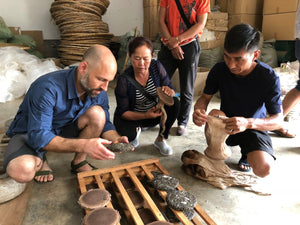
Our teas don't come from wholesale warehouses or unknown sources. We travel to the small producers we source from – whether it's a Japanese family tea garden, a Chinese mountain village or an oolong maker in Taiwan.
Stories
We meet them in person, learn their story, see how they care for their plants, and how they process the fresh leaves.
These experiences are the soul of our teas. This way, not only is the quality guaranteed, but also the fact that behind each cup there is a real person, a real story.

Direct
This direct relationship is valuable to us. Not only because of the excellent tea, but because we believe that trust, respect and personal presence are what make the tea drinking experience truly special.
Teavolution Tea Blog

Shincha - Japan's First Tea of Spring
Read more

What is shading in Japanese tea? | Matcha, Gyokuro, Kabusecha
Read more

Oct 2, 2025
Sencha tea
Read more

Sep 21, 2025
Matcha shortage in Japan
Read more
Mar 18, 2025
Puer tea, puerh or pu-erh
Read more
Mar 18, 2025
Types of tea
Read more
