


Mengku Mu Ye Chun 'chocolate' shu puer 100 g
Tax included
Shipping calculated at checkout
Pickup currently unavailable
Mengku Mu Ye Chun 'chocolate' 2014
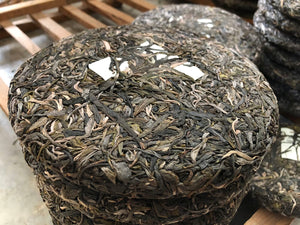
The Mengku Mu Ye Chun 2014 is a mature, smooth, and very drinkable shu puerh tea from the Shuangjiang Mengku Tea Factory / Mengku Rongshi world. The tea material was fermented in 2011, then pressed into 100-gram breakable brick form in 2014.
This practical, "chocolate bar"-like design makes it particularly convenient to use: small squares can be easily detached, so there's no need to break off a larger cake or solid brick for each tea session.
Mu Ye Chun is a special line of Mengku that is linked to the Lincang region, specifically to Yongde materials. This tea is not among the very dark, heavy, earthy shu puerhs, but rather exhibits a more balanced, woody, and clean character. Its flavor is soft, round, and friendly: dark wood, damp forest floor, a slight minerality, subtle sweetness, and a warm, full finish characterize it.
The cup is dark, deep in color, and the texture of the liquor is smooth, gradually opening up in successive infusions. In the first few infusions, woody, mature notes dominate; later, a softer sweetness and a silkier body may come to the forefront. Like a good shu puer, it doesn't rely on a single spectacular flavor note, but slowly and quietly adds depth: it warms, slows you down, and gently accompanies your attention.
It can be an excellent choice for those who enjoy the earthier, deeper world of puer teas but are not looking for an overly heavy or raw character. It is also friendly for beginner puer enthusiasts because it is easy to prepare and does not require particular caution, while experienced tea drinkers may also find it interesting due to the Mengku / Mu Ye Chun line.
It is also excellent for everyday drinking: a warming, focusing beverage in the morning or forenoon, and a pleasant, round finish after a meal. Prepared gongfu style with several short infusions, it truly reveals how the woody, mature character gradually transforms into a sweeter, smoother direction.
Preparation suggestion
- Gongfu: 4–6 g tea / 100 ml water
- Water temperature: 95–100 °C
- First infusions: 10–20 seconds
- Further infusions: gradually lengthening
- Suggestion: it is worth discarding the first short rinse to allow the pressed leaves to open up nicely
Characteristics
- Type: shu puer
- Vintage: 2014
- Fermentation: 2011
- Form: breakable puerh brick
- Net weight: 100 g
- Producer / factory: Shuangjiang Mengku Tea Factory / Mengku Rongshi
- Flavor profile: smooth, woody, full, subtly sweet, mature

Personal contact
Our teas don't come from wholesale warehouses or unknown sources. We travel to the small producers we source from – whether it's a Japanese family tea garden, a Chinese mountain village or an oolong maker in Taiwan.
Stories
We meet them in person, learn their story, see how they care for their plants, and how they process the fresh leaves.
These experiences are the soul of our teas. This way, not only is the quality guaranteed, but also the fact that behind each cup there is a real person, a real story.


Direct
This direct relationship is valuable to us. Not only because of the excellent tea, but because we believe that trust, respect and personal presence are what make the tea drinking experience truly special.
Teavolution Tea Blog

Shincha - Japan's First Tea of Spring
Read more

What is shading in Japanese tea? | Matcha, Gyokuro, Kabusecha
Read more

Oct 2, 2025
Sencha tea
Read more

Sep 21, 2025
Matcha shortage in Japan
Read more
Mar 18, 2025
Puer tea, puerh or pu-erh
Read more
Mar 18, 2025
Types of tea
Read more
