


The sweetest parts of gyokuro sometimes hide not in the leaves, but in the delicate, emerald green stems. Sakamoto Karigane S is not merely a byproduct, but a carefully selected, premium Japanese green tea: it is made from the highest quality stem portions and smaller leaf pieces of the Sakamoto family's shaded gyokuros.
In the cup, the rich umami of gyokuro meets the lighter, fresher, and more smoothly flowing character of karigane. The result is both deep and refreshing, creamy and clear – a tea whose intensity does not overpower the palate.
What is karigane?
Karigane is a special, higher-quality variation of kukicha, made from young stems, leaf petioles, and delicate leaf parts selected during the processing of gyokuro or other noble, shaded Japanese teas. The Japanese name means "the cry of the wild goose," and it is traditionally associated with stem teas derived from the best shaded teas.
Common kukicha often comes from sencha or bancha processing. In contrast, the raw material for Kamome karigane is gyokuro: the tea bushes are shaded before harvest, allowing the plants to develop the sweet, full-bodied, and umami-rich character typical of gyokuro. The stems reveal this depth in a lighter, clearer form.
About Master Sakamoto's Organic Tea Farm
The tea originates from the Shibushi area of Kagoshima prefecture in southern Japan. Shuichiro Sakamoto is one of the pioneers of organic gyokuro production in Japan: his family farm has been using ecological methods since 1985, and today holds JAS and EU organic certifications.
Sakamoto-san prepares his own fermented bokashi nutrient, paying special attention to soil microorganisms, plant regeneration, and the gradual buildup of shading. Processing and final sorting also take place on the farm, so the producer controls the tea's journey from the field to the sealed package.
Meeting of Three Special Cultivars
Karigane Kamome is a blend of stem parts and leaves selected from the shaded gyokuros of the Saemidori, Seimei, and Haruto 34 cultivars. The blend yields an exceptionally vibrant green raw material, rich umami, full sweetness, and a delicate fruity-floral aroma.
According to the professional materials of the Japanese Ministry of Agriculture, bright and vibrant green stems selected from gyokuro and high-quality sencha are particularly highly valued; the fresher and greener the stem part, the more potent its natural sweetness can be. Karigane S already shows this fresh, carefully selected quality when dry.
Velvety, Deep, and Surprisingly Fruity in Flavor
The first infusion arrives with a dense, almost creamy texture. Alongside the full umami, notes reminiscent of sugar snap peas, fresh spring vegetables, and sweet marine aromas emerge. This is followed by muscat grape, light melon, and delicate florality.
The sip is smooth and velvety, with low bitterness and hardly perceptible astringency. The finish is long, clean, and cooling, retaining the sweet-umami echo of gyokuro for a long time. The second and third infusions do not quickly diminish either: the tea slowly becomes lighter, while its fresh, fruity, and green aromas remain beautifully present.
- Aroma: fresh greens, spring herbs, delicate florality
- Taste: creamy umami, sugar snap peas, muscat grape, and light melon
- Texture: full-bodied, smooth, and velvety
- Finish: long, clean, cooling, and recurrently sweet
- Bitterness: very low, especially when prepared with cooler water
Not a Cheaper Substitute for Gyokuro
Karigane Kamome is lighter than a gyokuro made exclusively from leaves, but no less sophisticated. It is made from the best first-selection stem parts, which is why it far surpasses an ordinary kukicha in terms of depth, texture, and persistence.
Due to the higher stem content, its caffeine content is expected to be lower than that of leaf gyokuros, while preserving the rounded, sweet-umami character of shaded tea. This makes it pleasantly drinkable and light-feeling – but it is important to remember that it naturally still contains caffeine.
Who Do We Recommend It To?
For those who love the rich umami of gyokuro but would sometimes enjoy it in a lighter, fresher, and less concentrated form. It is also an excellent choice for those new to Japanese teas, as its low bitterness and natural sweetness make it easily lovable. For experienced tea drinkers, it can become memorable due to the special cultivars, careful first selection, and the depth that persists through multiple infusions.
Preparation Suggestion – Concentrated
- Tea quantity: 7 g
- Water quantity: 100 ml
- Water temperature: 55–60 °C
- First infusion: 120 seconds
- Second infusion: immediate pouring
- Further infusions: gradually warmer water, 10–30 seconds
This method best showcases the tea's creamy texture, dense umami, and muscat sweetness. Pour out the tea to the last drop each time.
Lighter, Everyday Preparation
Use 4 g of tea with 150 ml of 75–80 °C water, and steep for 50–60 seconds. This will result in a fresher, livelier, more stem-tea-like cup, with delicate sweetness and a cleaner, more refreshing finish.
It is also beautiful when cold-brewed: 6–8 g of tea in 500 ml of cold, soft water, placed in the refrigerator for 2–4 hours. Cold water particularly clearly brings out the muscat fruitiness, silky umami, and almost completely bitterness-free character of Karigane S.
Karigane Kamome is proof that every part of gyokuro has value. In a single sip, there is Master Sakamoto's living soil, the silence of long shading, and the delicate economy of the Japanese tea philosophy: nothing is lost if we approach it with sufficient attention.

Personal contact
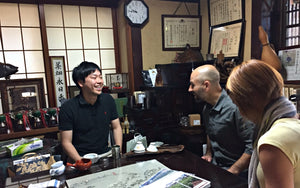
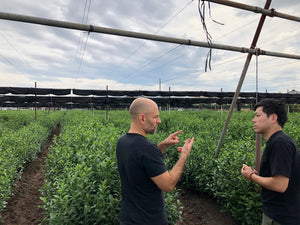
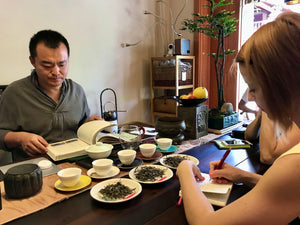
Our teas don't come from wholesale warehouses or unknown sources. We travel to the small producers we source from – whether it's a Japanese family tea garden, a Chinese mountain village or an oolong maker in Taiwan.
Stories
We meet them in person, learn their story, see how they care for their plants, and how they process the fresh leaves.
These experiences are the soul of our teas. This way, not only is the quality guaranteed, but also the fact that behind each cup there is a real person, a real story.
Direct
This direct relationship is valuable to us. Not only because of the excellent tea, but because we believe that trust, respect and personal presence are what make the tea drinking experience truly special.
Teavolution Tea Blog

Shincha - Japan's First Tea of Spring
Read more

What is shading in Japanese tea? | Matcha, Gyokuro, Kabusecha
Read more

Oct 2, 2025
Sencha tea
Read more
Sep 21, 2025
Matcha shortage in Japan
Read more
Mar 18, 2025
Puer tea, puerh or pu-erh
Read more
Mar 18, 2025
Types of tea
Read more
