


Ihachinouen Hōjicha – if you’ve only ever known hōjicha as a roasted, soothing tea, this item subtly changes the picture. Here, the roasting doesn’t obscure it, but rather highlights it: fragrant, rich, yet clean and fresh.
Origin & creators
Ihachinouen (Ihachi Farm) operates on steep slopes overlooking the Abe River in the Shizuoka mountains – at an altitude of around 450m . The garden is over 120 years old and the teas are made in the farm’s own processing plant.
The focus of cultivation is a chemical-free approach (without crop protection and artificial fertilizers), with natural nutrient replenishment - including "bokashi"-style, organic-based fertilization, which supports the sweeter, fuller character of the teas.
What makes this hōjicha special?
- It is made from the first harvest (ichibancha) – not a “leftover” type, but a genuine raw material quality.
- Leaf hōjicha – despite the roasting, the "green" purity of the tea is also preserved.
- Food-friendly character – a particularly good companion for Japanese dishes and fatty dishes.
Flavor profile – nicely broken down
- Aroma: roasted hazelnuts, caramel, slight cocoa-warm tones
- Taste: full, flavorful, yet clean – a fresh, “sencha” feel behind the roasting
- Aftertaste: long-lasting, pleasantly toasted, silky dry
Preparation
Asian style (kyusu / shiboridashi)
- Tea: 4–5 g
- Water: 150ml
- Temperature: 90–95°C
- Time: 45–60 sec.
- Re-soaking: 2nd pour 10–20 seconds, 3rd pour 45–60 seconds
Western style
- Tea: 3 g
- Water: 250–300 ml
- Temperature: 95°C
- Time: 2–3 minutes
Cold brew
- Tea: 8–10 g / 1 liter
- Water: cold, soft (if available)
- Time: 6–10 hours in the refrigerator
- Tip: after filtering, with ice, without citrus peel – let the roast remain pure.
Teavolution tip: if you want a “fresh and rich” cup, increase the dosage by half a gram and shorten the time. Hōjicha responds surprisingly well to precise, short steeping.
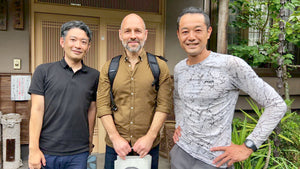
Personal contact
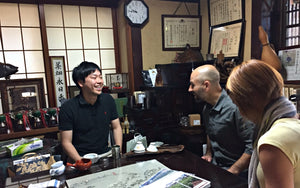
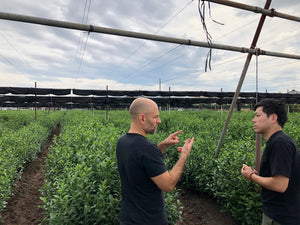
Our teas don't come from wholesale warehouses or unknown sources. We travel to the small producers we source from – whether it's a Japanese family tea garden, a Chinese mountain village or an oolong maker in Taiwan.
Stories
We meet them in person, learn their story, see how they care for their plants, and how they process the fresh leaves.
These experiences are the soul of our teas. This way, not only is the quality guaranteed, but also the fact that behind each cup there is a real person, a real story.
Direct
This direct relationship is valuable to us. Not only because of the excellent tea, but because we believe that trust, respect and personal presence are what make the tea drinking experience truly special.
Teavolution Tea Blog

Shincha - Japan's First Tea of Spring
Read more

What is shading in Japanese tea? | Matcha, Gyokuro, Kabusecha
Read more

Oct 2, 2025
Sencha tea
Read more
Sep 21, 2025
Matcha shortage in Japan
Read more
Mar 18, 2025
Puer tea, puerh or pu-erh
Read more
Mar 18, 2025
Types of tea
Read more
