
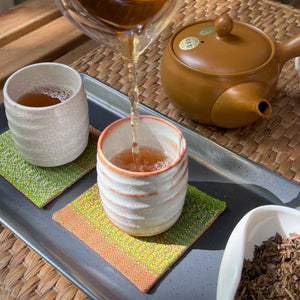


Agata no Kaori Hojicha – when Japanese tea is roasted, warm, and easy to love
Agata no Kaori is not the Japanese green tea that enters the room with bright freshness, marine umami, or vivid green character. This is another world. Warmer. Softer. More roasted.
Horii Shichimeien's Uji Hojicha is a golden-brown roasted Japanese green tea, whose first great strength is its aroma. Even from the dry leaves, roasted grain, nuts, a slight caramel, and a clean, warm roasted aroma emanate. In the cup, it is soft, smooth, with little bitterness — much more a comforting than an invigorating tea.
Not a classic green tea experience
If someone has avoided Japanese green teas so far because they felt them too grassy, too green, or too sensitive to prepare, hojicha can be a good entry point. Roasting completely transforms the tea's character: instead of fresh vegetal notes, warmer, nuttier, grainier flavors appear.
That's why Agata no Kaori is easily lovable even for those who come to tea from coffee, roasted seeds, roasted rice, more caramel-like scents, or darker-toned beverages.
What does it taste like?
- Aroma: roasted grain, nuts, slight caramel, warm roasted aroma
- Taste: soft, clean, nutty, subtly sweet
- Bitterness: low
- Body: light-medium, with a smooth mouthfeel
- Mood: calm, homely, evening tea character
When to drink it?
After lunch, when something clean and roasted would hit the spot. In the afternoon, when you crave a softer, less agitating drink instead of coffee. In the evening, when you're no longer looking for an invigorating sencha, but something that nicely wraps up the day.
Agata no Kaori works particularly well after meals, with simple pastries, with morning toast, with rice-based or nutty desserts, but it is also a very easily drinkable everyday tea on its own.
Preparation
Teavolution recommendation for an easily drinkable cup:
- 5 g tea
- 200 ml water
- 90–95 °C
- 30–45 seconds
For a more intense, Japanese-style preparation:
- 8–10 g tea
- 150 ml water
- 80–90 °C
- 10–20 seconds
Hojicha is not a delicate tea. It works well with hotter water and doesn't punish you as quickly as many finer green teas. If you brew it stronger, it will be deeper, more roasted; if looser, it will be cleaner and lighter.
Who do we recommend it to?
To those who want a Japanese tea but don't necessarily want to start from the classic green tea direction. To those who like roasted, nutty, grainy flavors. To those who are looking for something calmer alongside or instead of coffee. And also to those who want an everyday tea that doesn't need over-explaining: just brew it, smell it, drink it, and enjoy it.
For us, Agata no Kaori is one of the friendliest faces of Japanese teas: simple, aromatic, warm, and honest.
Personal contact
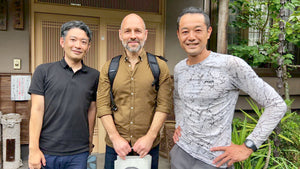
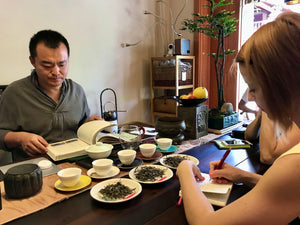
Our teas don't come from wholesale warehouses or unknown sources. We travel to the small producers we source from – whether it's a Japanese family tea garden, a Chinese mountain village or an oolong maker in Taiwan.
Stories
We meet them in person, learn their story, see how they care for their plants, and how they process the fresh leaves.
These experiences are the soul of our teas. This way, not only is the quality guaranteed, but also the fact that behind each cup there is a real person, a real story.
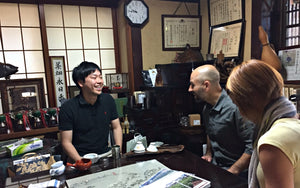

Direct
This direct relationship is valuable to us. Not only because of the excellent tea, but because we believe that trust, respect and personal presence are what make the tea drinking experience truly special.
Teavolution Tea Blog

Shincha - Japan's First Tea of Spring
Read more

What is shading in Japanese tea? | Matcha, Gyokuro, Kabusecha
Read more

Oct 2, 2025
Sencha tea
Read more

Sep 21, 2025
Matcha shortage in Japan
Read more
Mar 18, 2025
Puer tea, puerh or pu-erh
Read more
Mar 18, 2025
Types of tea
Read more
