


Yixing Xiao Hong Ni Li Xing Teapot
This classic, pear-shaped Yixing teapot is a quiet yet distinctive companion for gongfu tea brewing. The Chinese name for the shape is Li Xing Hu – meaning pear shape – which is one of the most beloved traditional Yixing forms: a low, rounded body, calm proportions, soft curves, and a stable presence on the table.
The material of the teapot is Xiao Hong Ni, Yixing small red clay. This fine-grained, high-iron clay takes on a warm, reddish tone after firing. It is unglazed pottery: the clay comes into direct contact with the tea, so the teapot begins to live its own life over time. With use, a delicate patina develops on it, and inside it slowly absorbs the aromas of the tea family we regularly brew in it.
Which teas do we recommend it for?
Due to the denser, finer structure of Xiao Hong Ni, it works particularly well with aromatic, fuller-bodied Chinese teas. It retains heat well, while not overpowering the tea's aroma, but rather rounding and deepening the sip.
- For Wuyi oolongs – Rou Gui, Shui Xian, Qi Dan, Da Hong Pao
- For Dancong oolongs – especially more fragrant, honey-floral varieties
- For red teas – Jin Jun Mei, Zheng Shan Xiao Zhong, Taiwanese red teas
- For Shu puerh – if we want a softer, rounder, deeper character
- For more mature sheng puerh – if the tea is no longer too brisk or green
It is worth choosing the teapot for one type of tea family.
Character of the form
The pear shape is a full, soft-bellied, proportionately built teapot. The wider body provides enough space for the leaves to unfurl, making it well-suited for multiple, short steeping gongfu brewing. The form is not ostentatious: it is rather calm, warm, and natural. It is a teapot that does not want to distract from the tea, but rather helps one to arrive at it more deeply.
Use and care
- Before first use, rinse several times with hot water.
- Do not use dish soap, scented cleaners, or a dishwasher.
- After use, rinse only with hot water, then leave to dry completely without the lid.
- It is worth using it for one tea family, as the clay will absorb the tea's aromas over time.
- Avoid sudden thermal shock: do not immediately pour boiling water onto a cold teapot.
Why do we love it?
Because a good Yixing teapot is not just a vessel. It not only holds the tea but slowly evolves with it. The warm red tone of Xiao Hong Ni, the calm proportions of the pear shape, and the living surface of the unglazed clay all bring the feeling we seek in gongfu tea brewing: attention, depth, and continuity.
This teapot is for those who are not looking for a quick solution, but rather a tea companion that accompanies them for years on the same journey – steep by steep, quietly, precisely.
Technical data
- Material: Yixing zisha clay, Xiao Hong Ni
- Form: Li Xing Hu – pear-shaped teapot
- Recommended use: gongfu tea brewing
- Recommended teas: Wuyi oolong, dancong oolong, red tea, puerh
- Capacity: [insert measured ml here]

Personal contact
Our teas don't come from wholesale warehouses or unknown sources. We travel to the small producers we source from – whether it's a Japanese family tea garden, a Chinese mountain village or an oolong maker in Taiwan.
Stories
We meet them in person, learn their story, see how they care for their plants, and how they process the fresh leaves.
These experiences are the soul of our teas. This way, not only is the quality guaranteed, but also the fact that behind each cup there is a real person, a real story.
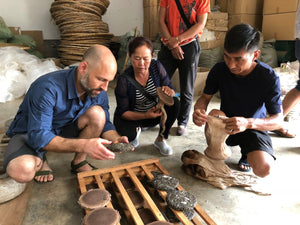

Direct
This direct relationship is valuable to us. Not only because of the excellent tea, but because we believe that trust, respect and personal presence are what make the tea drinking experience truly special.
Teavolution Tea Blog

Shincha - Japan's First Tea of Spring
Read more

What is shading in Japanese tea? | Matcha, Gyokuro, Kabusecha
Read more

Oct 2, 2025
Sencha tea
Read more
Sep 21, 2025
Matcha shortage in Japan
Read more
Mar 18, 2025
Puer tea, puerh or pu-erh
Read more
Mar 18, 2025
Types of tea
Read more
