


Tanikawa Jin – Tanka Mogake Shiboridashi, 125 ml
Tax included
Shipping calculated at checkout
Tanikawa Jin – Tanka Mogake shiboridashi, 125 ml
Sometimes ceramics are not simply decorated: their surface is shaped by the encounter of fire, clay, and the sea itself. This special, handmade shiboridashi is the work of Tanikawa Jin, a ceramic artist from Tokoname, primarily known as a master of traditional mogake and hidasuki techniques.
The brownish, copper-colored, and subtly golden lines running across the subdued, charcoal gray surface are not painted motifs. Each pattern is born during the firing process, which is why no two pieces are exactly alike.
Tanka – the depth of charcoal and fire
The term tanka (炭化) means carbonization or charring. The ceramic is fired for more than thirty hours in a reduction kiln atmosphere. The oxygen-deficient environment changes the natural color of the clay, creating deep, smoky, grayish-black shades.
The result is a velvety, matte surface that simultaneously appears as an ancient object and a refined contemporary ceramic.
Mogake – the imprint of the sea
Mogake (藻掛け) is a characteristic Tokoname decoration technique dating back to the 19th century. Before firing, dried amamo seaweed is wrapped around the clay body. The minerals in the plant react with the clay in the kiln, and then the seaweed burns away, leaving behind its organic, subtly undulating pattern.
The position and thickness of the seaweed, the composition of the clay, and the kiln atmosphere create a different image each time. Mogake is therefore not just decoration, but a unique imprint of the moment of creation: a line that cannot be drawn exactly the same way again.
The work of Tanikawa Jin
Born in 1952, Tanikawa Jin himself practices senchadō, the ceremonial culture of Japanese loose-leaf tea. In his vessels, beauty is therefore never separated from usability.
The shiboridashi is made by hand without a mold, so in addition to the mogake pattern, there may be minor variations in its shape, size, and capacity. These are not flaws but natural characteristics of unique handmade craftsmanship.
Preparing tea in a shiboridashi
A shiboridashi is a handleless Japanese teapot, primarily designed for making smaller quantities of high-quality tea in a concentrated manner. Its spacious interior provides ample room for the leaves to unfurl, and the pour spout, controllable with the lid, allows you to dispense even the last, most flavor-rich drops.
The pot is particularly suitable for:
- gyokuro,
- kabusecha,
- premium sencha,
- kamairicha,
- and other whole-leaf Japanese, Chinese, or Taiwanese teas.
Very finely broken, deeply steamed fukamushi teas may slow down pouring, so for these, we recommend a kyusu with a finer filter.
Product details
- Maker: Tanikawa Jin (谷川仁)
- Origin: Tokoname, Aichi Prefecture, Japan
- Ceramic type: Tokoname-yaki
- Shape: handleless shiboridashi
- Material: unglazed clay
- Firing: tanka, reduction carbonization firing
- Decoration: traditional amamo seaweed mogake
- Total capacity: approximately 125 ml
- Capacity variation: ±20 ml due to handmade nature
- Diameter: approximately 9.7 cm
- Height: approximately 7.5 cm
The capacity is measured to the rim, without tea leaves. The comfortable usable capacity is smaller.
Cleaning and care
Before first use, rinse with hot water and allow to dry completely. After use, remove the leaves and rinse with clean water. Dishwasher, microwave, and direct fire use are not recommended.
Since the shiboridashi is made from unglazed ceramic, it may subtly absorb the aroma of the teas brewed in it over time. It is advisable to use it for one tea family – for example, Japanese green teas. Always allow it to dry completely before storage.
The mogake pattern, the color shade of the surface, and the shape and exact size of the pot may vary from piece to piece. This is precisely what makes each shiboridashi a unique, unrepeatable creation.
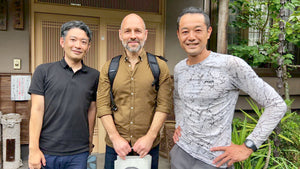
Personal contact
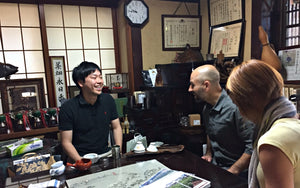
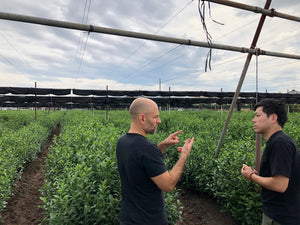
Our teas don't come from wholesale warehouses or unknown sources. We travel to the small producers we source from – whether it's a Japanese family tea garden, a Chinese mountain village or an oolong maker in Taiwan.
Stories
We meet them in person, learn their story, see how they care for their plants, and how they process the fresh leaves.
These experiences are the soul of our teas. This way, not only is the quality guaranteed, but also the fact that behind each cup there is a real person, a real story.
Direct
This direct relationship is valuable to us. Not only because of the excellent tea, but because we believe that trust, respect and personal presence are what make the tea drinking experience truly special.
Teavolution Tea Blog

Shincha - Japan's First Tea of Spring
Read more

What is shading in Japanese tea? | Matcha, Gyokuro, Kabusecha
Read more

Oct 2, 2025
Sencha tea
Read more
Sep 21, 2025
Matcha shortage in Japan
Read more
Mar 18, 2025
Puer tea, puerh or pu-erh
Read more
Mar 18, 2025
Types of tea
Read more
