


Wuliangshan • Sheng Pu-er (Spring 2007)
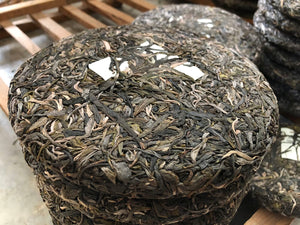
Naturally aged sheng puer made from spring raw material harvested in the Wuliang Mountains, in the north-central mountain ranges of Yunnan.
Its aroma features honey, mountain flowers, and dried apricot; its taste offers clean minerality, pine resin, cedar, and subtle tobacco notes. The sip starts silky, then an elegantly firm astringency and camphor coolness open the way for a long-lasting, sweet aftertaste.
Origin & Character
Origin: Wuliangshan, Yunnan (China). Teas from this region often exhibit a lighter, more floral-fruity character than those from southern mountains; this 2007 lot beautifully exemplifies this: clean, well-ordered aromatics, a well-built body, and a long finish.
Processing & Aging
Classic sheng processing: withering, gentle wok-frying, rolling, sun-drying – followed by natural post-fermentation. Over the years, it has mellowed, most of the green edge has softened, and the aroma and aftertaste have deepened.
Flavor Profile
- Aroma: honey, mountain flowers, dried apricot, cedar, subtle tobacco.
- Taste: apricot-herbaceous opening, clean minerality, resinous-woody layers, mild caramel sweetness.
- Texture: silky and full, lively, "dry" mountain feel.
- Finish: long-lingering camphor coolness, sweet "hui gan".
- Mood: focused, clear, meditative – reveals most of its facets with many short infusions.
Brewing Suggestions
Asian (gongfu): 5–6 g / 100 ml, 95–98 °C. Short rinse, then starting from 8–12 seconds, many short infusions (6–10+). In later rounds, gradually increase steeping time (by 2–3 seconds), temperature can remain high. A thick-walled gaiwan or a smaller (120–150 ml) clay/porcelain teapot is recommended.
Western: 2.5–3 g / 250 ml, 95–96 °C, 2:30–3:00 minutes; second infusion 3:30–4:00 minutes. Clean, round, slightly astringent, long sweet aftertaste.
Water & Equipment
It reveals its purest character with soft, low-mineral water. Wuliang mountain sheng also performs beautifully in thick-walled porcelain or neutral, lightly fired Yixing clay.
Tip
If the astringency is sharper in the early infusions, reduce the water temperature to 92–94 °C or shorten the steeping time. The depth of aroma and flavor fully develops in the 3rd–6th infusions.
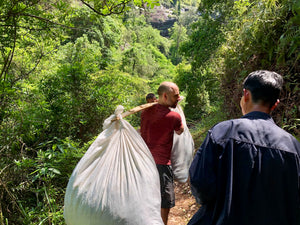
Personal contact
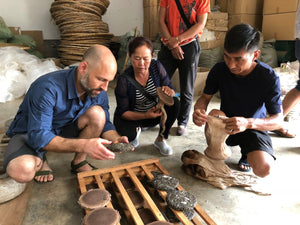
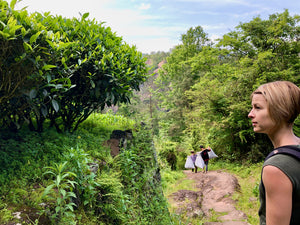
Our teas don't come from wholesale warehouses or unknown sources. We travel to the small producers we source from – whether it's a Japanese family tea garden, a Chinese mountain village or an oolong maker in Taiwan.
Stories
We meet them in person, learn their story, see how they care for their plants, and how they process the fresh leaves.
These experiences are the soul of our teas. This way, not only is the quality guaranteed, but also the fact that behind each cup there is a real person, a real story.
Direct
This direct relationship is valuable to us. Not only because of the excellent tea, but because we believe that trust, respect and personal presence are what make the tea drinking experience truly special.
Teavolution Tea Blog

Shincha - Japan's First Tea of Spring
Read more

What is shading in Japanese tea? | Matcha, Gyokuro, Kabusecha
Read more

Oct 2, 2025
Sencha tea
Read more
Sep 21, 2025
Matcha shortage in Japan
Read more
Mar 18, 2025
Puer tea, puerh or pu-erh
Read more
Mar 18, 2025
Types of tea
Read more
