


Jingmai Autumn Shengtai Raw Puer 2017
Tax included
Shipping calculated at checkout
Jingmai Shengtai • 2017 Autumn – Fragrant, long-lasting, elegantly slender sheng
The tea material comes from the natural tea gardens on the top of Jingmai mountain; the harvest took place in autumn, from early to mid-2017 (early September to mid-October). The processing is manual, and the tea was pressed into 357g cakes.
– Natural tea garden (shengtai), top of Jingmai mountain • 09. – mid-10. 2017 • manual processing • 357g cake
Autumn in Jingmai often yields more yellow flakes, so the producers opted for a higher plucking standard (1 bud / 2 leaves, partly 1 bud / 3–4 leaves) to obtain a cleaner raw material requiring minimal sorting. In autumn, typically 1 kg of sorted maocha is produced from 7 kg of fresh leaves (in spring, this ratio is about 5:1), making the sorted raw material also a manufacturing technology advantage.
Autumn teas, due to their thicker stems, can naturally be "redder" (the sha qing wok heat treatment penetrates the tissues less easily); for this batch, the processing was fine-tuned accordingly to preserve the clean fragrance and elegant sip.
Taste and aroma in the cup
- Aroma: lively, clean, floral-sweet Jingmai aromatics, persistent aromatic cloud.
- Mouthfeel: slimmer body, yet silky flow; good stamina over many infusions.
- Taste: sweet in the opening, then a slightly lively sourness-bitterness that keeps the profile clean.
- Finish: long, fragrant, with gradual sweetening (huigan), clean aftertaste.
Overall impression: the autumn Shengtai is slimmer than its spring counterpart, but compensates in aroma; due to the 2017 weather, the astringency is slightly more pronounced, yet it's pleasantly drinkable and a particularly good "daily tea". It also ages beautifully in the long term.
Processing and plucking standard – why is it important?
- In the autumn season, there are more yellow flakes, so a higher plucking standard (1 bud/2 leaves) helps to yield cleaner raw material and reduce the need for subsequent sorting.
- The yield is lower at this time (approx. 7:1 fresh leaves : maocha), which results in a more concentrated, "clean" finished tea.
- Due to thicker stems, a slightly redder leaf color is natural – maintaining this requires professional wok handling.
Preparation suggestions
Gongfu (Asian style): 5–6 g / 100 ml, 92–95 °C. A short awakening rinse is optional. 1st–2nd infusion: 8–12 sec, then 15–25 sec; later +10–15 sec / infusion. You can expect 10+ infusions.
Western style: 3 g / 250 ml, 92–95 °C, 2–3 minutes. The same leaves can be infused 2–3 times.
Who do we recommend it to?
To those who appreciate the clean, fragrance-driven Jingmai character and value the airier, more elegant body of autumn plucking – for everyday consumption and quiet, long tea sessions alike.
Personal contact
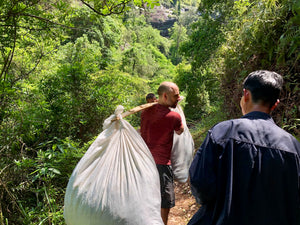
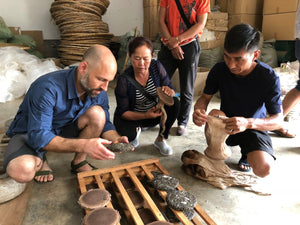
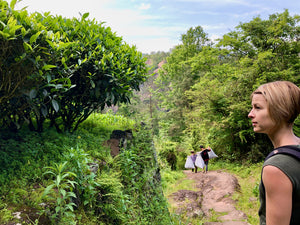
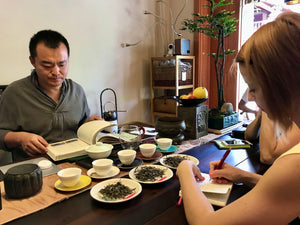
Our teas don't come from wholesale warehouses or unknown sources. We travel to the small producers we source from – whether it's a Japanese family tea garden, a Chinese mountain village or an oolong maker in Taiwan.
Stories
We meet them in person, learn their story, see how they care for their plants, and how they process the fresh leaves.
These experiences are the soul of our teas. This way, not only is the quality guaranteed, but also the fact that behind each cup there is a real person, a real story.
Direct
This direct relationship is valuable to us. Not only because of the excellent tea, but because we believe that trust, respect and personal presence are what make the tea drinking experience truly special.
Teavolution Tea Blog

Shincha - Japan's First Tea of Spring
Read more

What is shading in Japanese tea? | Matcha, Gyokuro, Kabusecha
Read more

Oct 2, 2025
Sencha tea
Read more

Sep 21, 2025
Matcha shortage in Japan
Read more
Mar 18, 2025
Puer tea, puerh or pu-erh
Read more
Mar 18, 2025
Types of tea
Read more
