


Gyokko Kuro Senbori Yohen kyusu 300 ml
Tax included
Shipping calculated at checkout
Pickup currently unavailable
Gyokko Kuro Senbori Yōhen – Medium Tokoname kyusu, 300 ml
In this teapot, black is not a single color. The surface varies from deep charcoal grey to smoky brown, with subtle reddish hues, as if the kiln's fire still glows within the clay.
This large Tokoname kyusu is the work of the Gyokko studio, specifically the second-generation master, Umehara Hirotaka. Its stable, rounded body, large side handle, and wide ceramic filter make it particularly comfortable for brewing multiple servings of tea.
Kuro Senbori Yōhen – Lines and Fire
Fine, parallel lines run around the body and lid of the teapot. The name senbori refers to this carved, grooved surface. The lines simultaneously make the rhythm of throwing tangible and emphasize the teapot's broad, calm form.
Yōhen (窯変) means "kiln variation": this term is used in Japanese ceramics to describe the natural changes in color and surface that occur during firing, under the influence of heat, flames, and the kiln atmosphere.
The brownish, reddish, and grayish transitions appearing on the lower part of the teapot are therefore not painted decorations. They are traces of the fire, which emerge slightly differently on each piece.
The Gyokko Studio
Gyokko Tōen has been making teapots in Tokoname since 1961. The multi-generational workshop has become particularly known for its thrown kyusus, reduction firing, and finely crafted ceramic filters.
Umehara Hirotaka, the second-generation Gyokko master, has received numerous Japanese ceramic art awards and the title of Traditional Craft Master from Japan's Ministry of Economy. In his work, formal precision always serves usability: the teapot is not merely a beautiful object, but a carefully balanced tea tool.
The total capacity of approximately 300 ml allows for brewing several cups of tea at once. It's a good choice for family or friendly tea sessions, entertaining guests, or for those who prefer to drink their daily Japanese teas from a larger mug.
The large size is paired with a wide side handle that provides a secure grip. The end of the spout is shaped into a slightly inverted triangle, which aids in precise, clean pouring and reduces after-drip.
Integrated Ceramic Filter
Inside the teapot is a wide, finely perforated ceramic filter. The filter is part of the teapot's body, so no separate metal filter basket is needed.
The large filter surface helps the tea pour evenly and quickly, while allowing the leaves to move freely and fully unfurl inside the teapot. This is particularly advantageous for Japanese green teas that can be steeped multiple times, where it's important that no water remains among the leaves between infusions.
Which Teas Do We Recommend It For?
- Sencha and everyday Japanese green teas,
- Bancha and Kukicha,
- Genmaicha,
- Hōjicha,
- Kamairicha,
- Japanese black tea – Wakōcha,
- As well as larger batches of Chinese and Taiwanese loose-leaf teas.
Due to its large capacity, we primarily recommend it for everyday, shared tea sessions. For concentrated gyokuro or small batches of premium sencha, a smaller, flatter kyusu or shiboridashi would be more appropriate.
Product Details
- Maker: Gyokko – Umehara Hirotaka
- Studio: Gyokko Tōen
- Origin: Tokoname, Aichi Prefecture, Japan
- Ceramic Type: Tokoname-yaki
- Shape: Yokode kyusu – Japanese teapot with a side handle
- Material: Tokoname clay rich in minerals and iron
- Surface: Unglazed, line-carved yōhen finish
- Filter: Integrated, wide ceramic filter
- Total Capacity: Approximately 300 ml
- Comfortable Usable Capacity: Approximately 280-300 ml
Due to handmade production and yōhen firing, color transitions, lines, and dimensions may vary slightly from piece to piece. These are not flaws but natural characteristics of individual craftsmanship.
Cleaning and Care
After use, remove the tea leaves and rinse the teapot with clean, warm water. Detergent is not recommended, as the unglazed clay may absorb its scent over time. Before storing, remove the lid and allow it to dry completely.
Instead of scrubbing, rinse any leaves remaining in the ceramic filter with running water. The teapot cannot be used directly over a flame or on a stovetop.
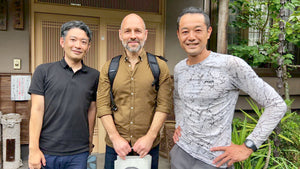
Personal contact
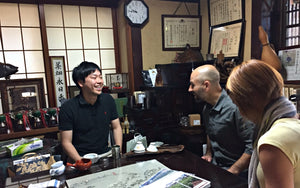
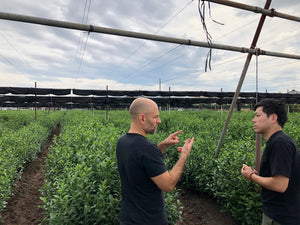
Our teas don't come from wholesale warehouses or unknown sources. We travel to the small producers we source from – whether it's a Japanese family tea garden, a Chinese mountain village or an oolong maker in Taiwan.
Stories
We meet them in person, learn their story, see how they care for their plants, and how they process the fresh leaves.
These experiences are the soul of our teas. This way, not only is the quality guaranteed, but also the fact that behind each cup there is a real person, a real story.
Direct
This direct relationship is valuable to us. Not only because of the excellent tea, but because we believe that trust, respect and personal presence are what make the tea drinking experience truly special.
Teavolution Tea Blog

Shincha - Japan's First Tea of Spring
Read more

What is shading in Japanese tea? | Matcha, Gyokuro, Kabusecha
Read more

Oct 2, 2025
Sencha tea
Read more
Sep 21, 2025
Matcha shortage in Japan
Read more
Mar 18, 2025
Puer tea, puerh or pu-erh
Read more
Mar 18, 2025
Types of tea
Read more
