


As if a smoothly polished dragon egg held the warmth of tea within: the beauty of this Yixing teapot stems from its simple, organic form. Its full, egg-shaped body gently tapers upwards, culminating in a slightly arched lid and a round knob. The short spout and generously curved handle nicely counterbalance the teapot's enclosed, compact form.
The natural, granular surface of duanni clay and its warm, reddish-brown hue give the teapot a rustic yet refined character. Its unglazed material slowly changes with its owner during use: regular tea sessions can gradually give its surface a deeper tone and a finer sheen. This quiet maturation makes Yixing teapots truly personal objects – we don't simply use them, we develop a relationship with them.
Its spherical body is conducive to the free unfurling of leaves, making it a particularly good choice for oolongs with larger leaves, red teas, and sheng and shu puer teas. The porous Yixing clay can soften the character of the tea, smoothing out rougher tones, while producing a full, concentrated brew.
Over time, the unglazed clay absorbs the subtle imprint of the aromas of regularly brewed tea, so it is advisable to use the teapot for a single type of tea or for closely related teas. Clean with only clean, warm water; detergent is not recommended.
An earthy, friendly teapot for those who appreciate not only the flavors but also the slow transformation of objects in their tea experience. Its form radiates tranquility, and its material, with each infusion, tells a little more deeply the story of shared tea sessions.

Personal contact
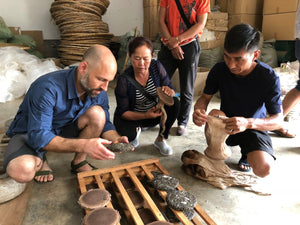
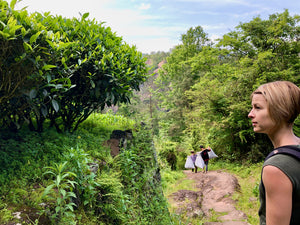
Our teas don't come from wholesale warehouses or unknown sources. We travel to the small producers we source from – whether it's a Japanese family tea garden, a Chinese mountain village or an oolong maker in Taiwan.
Stories
We meet them in person, learn their story, see how they care for their plants, and how they process the fresh leaves.
These experiences are the soul of our teas. This way, not only is the quality guaranteed, but also the fact that behind each cup there is a real person, a real story.
Direct
This direct relationship is valuable to us. Not only because of the excellent tea, but because we believe that trust, respect and personal presence are what make the tea drinking experience truly special.
Teavolution Tea Blog

Shincha - Japan's First Tea of Spring
Read more

What is shading in Japanese tea? | Matcha, Gyokuro, Kabusecha
Read more

Oct 2, 2025
Sencha tea
Read more

Sep 21, 2025
Matcha shortage in Japan
Read more
Mar 18, 2025
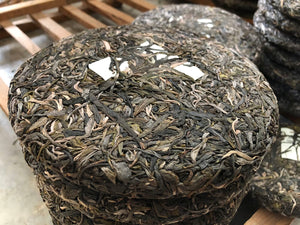
Puer tea, puerh or pu-erh
Read more
Mar 18, 2025
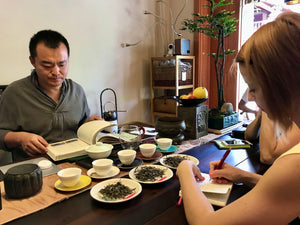
Types of tea
Read more
