
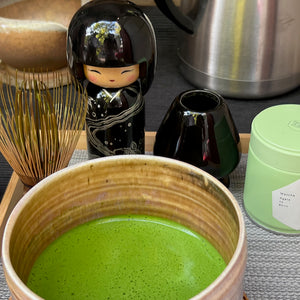


Matcha Agata no shiro - Ceremonial grade 30g
Tax included
Shipping calculated at checkout
Agata no Shiro – Ceremonial Grade Matcha
Agata no Shiro is an elegant matcha, evoking the Uji tradition: with a silky, creamy texture, deep umami, and subtle floral-honey sweetness. The sip is clean and smooth, the aftertaste lingers, and bitterness is barely perceptible. It's the kind of cup that elevates the everyday – and still offers layers for even experienced tea connoisseurs.
Origin & Processing
- Style: Uji matcha (shaded tencha from stone mill grinding)
- Processing: 20+ days of shading → steaming → drying → stem removal (tencha) → fine stone mill grinding (≤10 μm)
- Profile: round, creamy, subtly astringent; clean, "green" sweetness
Flavor Profile
- Aroma: fresh tea field and pine pollen notes, white flowers, creamy undertones
- Palate: silky umami, floral honey, white chocolate, and fresh cream
- Finish: long-lasting sweet, clean, and cool freshness
- Body: creamy, velvety, delicately oily sensation
Preparation – Recommendations
Tip: Sift the powder directly before preparation, use soft water (TDS ~30–80 ppm), and a preheated chawan. The temperature should be lower than for loose leaf teas.
Usucha (Light, Foamy Matcha)
- Matcha/Water: 2 g (approx. 2 chashaku) / 60–70 ml
- Water: 75–80 °C
- Method: sifting → thick paste with a small amount of water → add remaining water → whisk for 15–20 seconds in Z/W motions until foamy
- Result: thick, fine-bubbled foam, round, sweet-umami sip
Koicha (Thick, "Spoon-Standing" Matcha)
- Matcha/Water: 4 g / 35–45 ml
- Water: 70–75 °C
- Method: whisk slowly in circular motions until creamy (without foaming)
- Result: deep, silky, very umami; minimal astringency
Matcha Latte (Silky, Dessert-like)
- Matcha/Water/Milk: 2 g / 30 ml water + 150–180 ml milk/plant-based drink
- Water/Milk Temperature: 70–75 °C (no need to boil)
- Method: mix matcha into a paste with a little water, then top with heated (or frothed) milk
- Result: creamy, white chocolate-honey character; a caffeine-free "comfort cup"
Useful Tips
- If too thick, add 5–10 ml of water; if too thin, increase the powder by 0.2–0.5 g.
- For lattes, choose a more natural, less sweet plant-based drink to allow the tea's flavor to shine through.
Storage
After opening, reseal tightly, protect from light and odors, and store in a cool place. For longer storage, refrigeration is recommended (allow to reach room temperature before opening), and enjoy freshness within 2–3 months.

Personal contact
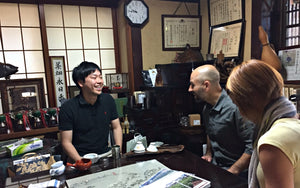
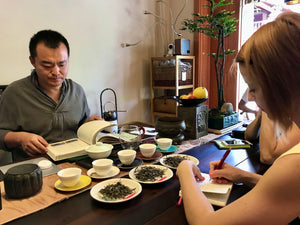
Our teas don't come from wholesale warehouses or unknown sources. We travel to the small producers we source from – whether it's a Japanese family tea garden, a Chinese mountain village or an oolong maker in Taiwan.
Stories
We meet them in person, learn their story, see how they care for their plants, and how they process the fresh leaves.
These experiences are the soul of our teas. This way, not only is the quality guaranteed, but also the fact that behind each cup there is a real person, a real story.

Direct
This direct relationship is valuable to us. Not only because of the excellent tea, but because we believe that trust, respect and personal presence are what make the tea drinking experience truly special.
Teavolution Tea Blog

Shincha - Japan's First Tea of Spring
Read more

What is shading in Japanese tea? | Matcha, Gyokuro, Kabusecha
Read more

Oct 2, 2025
Sencha tea
Read more
Sep 21, 2025
Matcha shortage in Japan
Read more
Mar 18, 2025
Puer tea, puerh or pu-erh
Read more
Mar 18, 2025
Types of tea
Read more
