
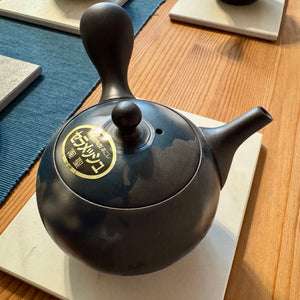


Blue Kyusu Japanese Teapot – 180 ml, with Clay Filter
Handmade kyusu (Japanese teapot with a side handle) with modern lines, a blue finish, and a light pattern. Its size and design are ideal for precise, clean preparation of Japanese green teas – such as sencha and gyokuro.
The built-in clay filter gently holds the leaves while ensuring a smooth and controlled pour.
Why is it a good choice?
- Designed for Japanese green teas – perfect volume for short, precise infusions.
- Precise, clean pour – the kyusu shape and clay filter work together.
- Ideal for 1–2 people – comfortable for tasting and everyday tea drinking.
- Tokoname tradition – the aesthetics and functionality of Japan's famous pottery center.
Recommended use
- Sencha: 4–6 g / 180 ml, 70–80 °C, 45–90 sec.
- Gyokuro: 5–7 g / 180 ml (or proportioned for a smaller cup), 50–60 °C, 90–150 sec.
- Oolong (optional): 90–95 °C, with shorter infusions – the leaves have room to unfurl, but the kyusu is primarily recommended for Japanese green teas.
Specification
- Capacity: 180 ml.
- Material: earthenware (pot), clay filter.
- Color: blue, with a light pattern.
- Origin/style: Tokoname-inspired Japanese kyusu shape.
Care and tips
- Preheating: Rinse with hot water before use for stable heat retention.
- Cleaning: Rinse only with clean water; do not use detergent.
- Drying: After tea, rinse, and leave with the lid open to dry completely.
- Avoid thermal shock: Do not switch suddenly from cold to hot and vice versa; do not use over direct flame.
- Dedication: Due to the unglazed/clay surface, it is advisable to "dedicate" it to one type of tea (primarily for Japanese green teas).
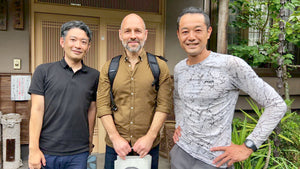
Personal contact
Our teas don't come from wholesale warehouses or unknown sources. We travel to the small producers we source from – whether it's a Japanese family tea garden, a Chinese mountain village or an oolong maker in Taiwan.
Stories
We meet them in person, learn their story, see how they care for their plants, and how they process the fresh leaves.
These experiences are the soul of our teas. This way, not only is the quality guaranteed, but also the fact that behind each cup there is a real person, a real story.
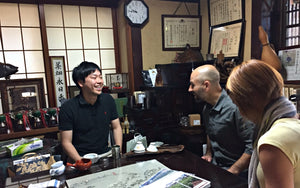
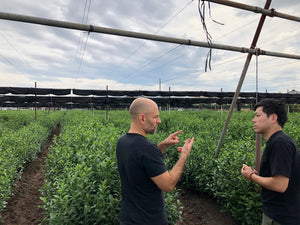
Direct
This direct relationship is valuable to us. Not only because of the excellent tea, but because we believe that trust, respect and personal presence are what make the tea drinking experience truly special.
Teavolution Tea Blog

Shincha - Japan's First Tea of Spring
Read more

What is shading in Japanese tea? | Matcha, Gyokuro, Kabusecha
Read more

Oct 2, 2025
Sencha tea
Read more
Sep 21, 2025
Matcha shortage in Japan
Read more
Mar 18, 2025
Puer tea, puerh or pu-erh
Read more
Mar 18, 2025
Types of tea
Read more
