


The Fujita Tokuta ash-glazed Tokoname kyusu is a distinctive yet harmonious Japanese teapot for those who appreciate the quiet presence of handmade objects even in their daily tea ritual.
Its shape is slightly trapezoidal, with a strong, modern line that is nonetheless deeply connected to Tokoname's centuries-old ceramic tradition.
The teapot is made of black clay, and its surface is covered with an ash glaze created using the haikake (灰掛) technique. The light, ash-like glaze spots beautifully contrast with the dark base, making the teapot earthy, natural, and, in my opinion, extremely elegant. :-)
The subtle variety of the glaze makes the object particularly beautiful up close: the teapot is not merely a tool, but a serene, distinctive part and ornament of the tea table.
The kyusu's side handle allows for comfortable, stable pouring.
Inside, there is a built-in ceramic sasame filter. Its wide design facilitates quick, even pouring, while retaining smaller leaves and finer tea dust particles in the pot. This can be particularly practical when preparing sencha, kabusecha, gyokuro, fukamushi sencha, genmaicha, or other Japanese green teas.
The 240 ml size is well-suited for a calm, personal tea-making session, but it can also be sufficient for two smaller cups. It is a teapot where preparing tea is not a quick routine, but a short, mindful break in the day.
Fujita Tokuta
Fujita Tokuta (藤田徳太) is a kyusu maker belonging to the younger generation of Tokoname. In his works, the classic function of Tokoname teapots meets contemporary forms and diverse surface treatments. This teapot also clearly demonstrates this approach: it is made for use, yet it has a strong, independent material presence.
Tokoname-yaki
Tokoname-yaki (常滑焼) is one of Japan's most famous ceramic traditions. Pottery has been made in Tokoname city, Aichi Prefecture, since the 12th century, and the settlement is one of Japan's six ancient kiln regions. The region is particularly famous for its teapots, where the form, pouring precision, and the practice of preparing loose-leaf tea form a single unit.
Details
- Maker: Fujita Tokuta (藤田徳太)
- Origin: Tokoname, Aichi Prefecture, Japan
- Material: black clay with ash-glazed surface
- Glazing technique: haikake (ash glaze)
- Filter: built-in ceramic sasame filter
- Capacity: 240 ml
- Width: approx. 15 cm, including handle
- Height: approx. 9 cm
Usage Recommendation
The teapot is primarily recommended for Japanese green teas. Before first use, rinse with warm water. Detergent is not recommended; after use, simply rinse with clean, warm water, then dry completely without the lid.
Personal contact
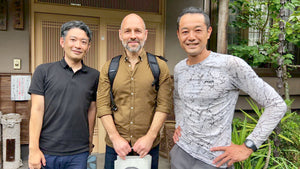
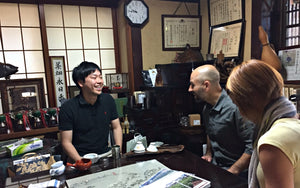
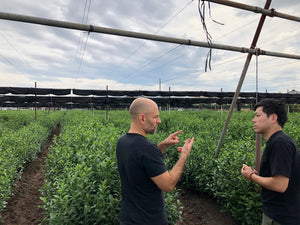
Our teas don't come from wholesale warehouses or unknown sources. We travel to the small producers we source from – whether it's a Japanese family tea garden, a Chinese mountain village or an oolong maker in Taiwan.
Stories
We meet them in person, learn their story, see how they care for their plants, and how they process the fresh leaves.
These experiences are the soul of our teas. This way, not only is the quality guaranteed, but also the fact that behind each cup there is a real person, a real story.
Direct
This direct relationship is valuable to us. Not only because of the excellent tea, but because we believe that trust, respect and personal presence are what make the tea drinking experience truly special.
Teavolution Tea Blog

Shincha - Japan's First Tea of Spring
Read more

What is shading in Japanese tea? | Matcha, Gyokuro, Kabusecha
Read more

Oct 2, 2025
Sencha tea
Read more
Sep 21, 2025
Matcha shortage in Japan
Read more
Mar 18, 2025
Puer tea, puerh or pu-erh
Read more
Mar 18, 2025
Types of tea
Read more
