


The character of this Yixing pot is defined by its low, wide body and strong, horizontal lines. Its form evokes traditional Jinglan, or "wellhead" pots: stable, earthy proportions with nothing superfluous, every detail serving tranquility and usability.
The wide, slightly convex body is topped by a large-diameter lid, crowned by a simple, bridge-shaped knob. A double line running beneath the lid subtly divides the pot's mass, further emphasizing its balanced, horizontal structure. The straight, upward-pointing spout and the large, curved handle visually counterbalance the low body.
The spacious interior allows tea leaves to open more freely, less compressed. This can be particularly beneficial for larger-leafed or expansively unfurling teas. The wide opening makes it easier to add leaves, empty the brewed tea, and clean the pot.
The unglazed Yixing clay slowly changes over time with use: its surface can develop a deeper tone and a fine, natural sheen with regular use. Since the material interacts to some extent with the brew, it is advisable to dedicate the pot to one type of tea or a small group of closely related teas.
Based on its shape and the thermal properties of its material, it can be a good companion for:
- Wuyi rock oolongs,
- Dancong oolongs,
- Taiwanese oolongs,
- Chinese red teas,
- Sheng and Shu Puer teas,
- and other post-fermented teas.
Which of these it forms the most beautiful pair with is ultimately determined by the precise composition of the clay, its wall thickness, and firing. The true voice of the pot will emerge after a few trials – when not only do we adapt the tea to the vessel, but the vessel also responds to the tea.
After use, it is sufficient to rinse it with clean, warm water and then dry it completely without the lid. Dish soap is not recommended.
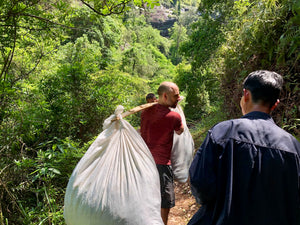
Personal contact
Our teas don't come from wholesale warehouses or unknown sources. We travel to the small producers we source from – whether it's a Japanese family tea garden, a Chinese mountain village or an oolong maker in Taiwan.
Stories
We meet them in person, learn their story, see how they care for their plants, and how they process the fresh leaves.
These experiences are the soul of our teas. This way, not only is the quality guaranteed, but also the fact that behind each cup there is a real person, a real story.
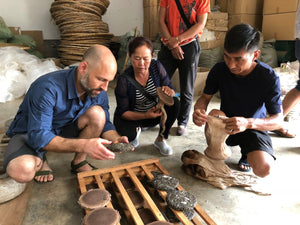
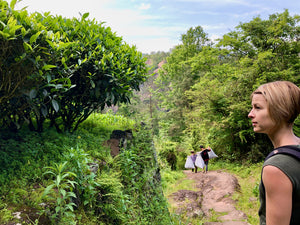
Direct
This direct relationship is valuable to us. Not only because of the excellent tea, but because we believe that trust, respect and personal presence are what make the tea drinking experience truly special.
Teavolution Tea Blog

Shincha - Japan's First Tea of Spring
Read more

What is shading in Japanese tea? | Matcha, Gyokuro, Kabusecha
Read more

Oct 2, 2025
Sencha tea
Read more
Sep 21, 2025
Matcha shortage in Japan
Read more
Mar 18, 2025
Puer tea, puerh or pu-erh
Read more
Mar 18, 2025
Types of tea
Read more
