


Mengku 'Gong Ting Palace' ripened pu-erh
Tax included
Shipping calculated at checkout
Gong Ting Palace – silky clean, soothing shu puer from Lincang
The Mu Ye Chun (木叶春, "Wood-Leaf-Spring") is one of the most well-known series from the Mengku Rongshi house. The tea is harvested and processed in the northwestern part of Yunnan, in the Lincang / Shuangjiang – Mengku region. The raw material, made from the local Yunnan Da Ye Zhong (large-leaf) tea variety, undergoes a clean, careful wo dui (wet piling) fermentation, resulting in a refined, silky-textured, low-bitterness shu puer.
Origin & Processing
- Region: Shuangjiang Mengku, Lincang, Yunnan, China
- Raw material: Yunnan large-leaf (Da Ye Zhong), typically spring harvest
- Processing: shu puer (wo dui fermentation), pressed cake (bingcha)
- Style: clean, without "composty" notes, sweet earthy profile
- Storage: dry, clean storage; recipe code and vintage on the lot label
Taste Experience
In the cup, a deep mahogany color, with aromas of dates, red fruits, cocoa nibs. The taste is clean, softly sweet; an earthy-woody base, molasses, subtle cedar, and toasted grains. The body is medium-full, the texture smooth, velvety. A long, warming finish, with a delicate sweet aftertaste.
Flavor Profile (briefly)
- Aroma: dates, cocoa nibs, subtle cedar
- Taste: sweetly earthy, molasses, toasted grain undertones
- Body: medium-full, silky mouthfeel
- Aftertaste: long, warm, clean
- Caffeine: low-medium (gentle, "evening-compatible")
Why we love it?
- Reliable everyday shu puer – clean ferment, without unnecessary rusticity.
- Versatile – handles multiple infusions well, works beautifully with both infusers and gaiwan.
- Soothing character – "comforting" sweetness, settling, warming presence.
Preparation
Suggestion: carefully break off pieces from the pressed cake, following the grain of the leaves; preheat your tools with hot water. A quick rinse (2-3 seconds) can be beneficial for shu puer.
Asian Style (gaiwan / small pot)
- Leaf : water – 5–6 g / 100 ml
- Water – 95–100 °C
- Steeping times – 10–12 sec → 12–15 sec → 18–25 sec, then gradually increase
- Infusions – 7–10+
Western Style (infuser / pot)
- Leaf : water – 3 g / 250 ml
- Water – 95–100 °C
- Steeping time – 2:30–3:30 minutes
- Infusions – 2 (for the second, add +30–60 sec)
Cold brew (refrigerated infusion)
- Leaf : water – 5 g / 500 ml
- Water – soft, refrigerator cold
- Steeping time – 8–12 hours in the refrigerator
- Serving – directly from the refrigerator, without ice; a soft, chocolatey-date refreshing drink
Useful tips
- Water – soft/medium-soft water enhances sweetness and texture.
- Dosing – if it feels too strong, reduce to 4 g/100 ml and shorten the first two infusions.
- Purity – the strength of Mu Ye Chun is its "clean" shu character; if you detect any off-notes, shorten the steeping time.
Ingredients & packaging
- Ingredient: 100% Camellia sinensis (shu puer)
- Packaging: aroma-sealed bag / measured from broken cake (according to current packaging)
- Storage: cool, dry place, protected from odors and direct light

Personal contact
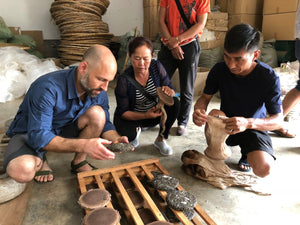
Our teas don't come from wholesale warehouses or unknown sources. We travel to the small producers we source from – whether it's a Japanese family tea garden, a Chinese mountain village or an oolong maker in Taiwan.
Stories
We meet them in person, learn their story, see how they care for their plants, and how they process the fresh leaves.
These experiences are the soul of our teas. This way, not only is the quality guaranteed, but also the fact that behind each cup there is a real person, a real story.

Direct
This direct relationship is valuable to us. Not only because of the excellent tea, but because we believe that trust, respect and personal presence are what make the tea drinking experience truly special.
Teavolution Tea Blog

Shincha - Japan's First Tea of Spring
Read more

What is shading in Japanese tea? | Matcha, Gyokuro, Kabusecha
Read more

Oct 2, 2025
Sencha tea
Read more

Sep 21, 2025
Matcha shortage in Japan
Read more
Mar 18, 2025
Puer tea, puerh or pu-erh
Read more
Mar 18, 2025
Types of tea
Read more
