
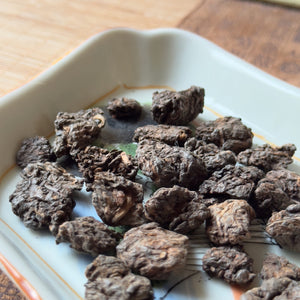


Lao Cha Tou (老茶头) – shu puer “old tea nuggets”
Lao cha tou are dense tea nuggets that naturally form during the making of shu puer (post-fermented tea), specifically during the wo dui (wet piling fermentation) process.
The pectins and sugars in the leaves bind the tea particles together during heating, humidification, and mixing; the master later hand-picks these "nuggets" from the finished batch. The result is a separate batch: a denser, creamier, generally sweeter, and very durable tea that withstands many infusions.
Origin & Material: Yunnan, China • larger-leaf Camellia sinensis var. assamica • shou puer processing, naturally formed nuggets (not pressed "mini tuo").
Flavor and Aroma Profile: natural sweetness, dates and dried fruit, caramel, cocoa powder, a slight woody-camphor coolness; thick, silky body and a clean, long-lasting sweet aftertaste. The nuggets open more slowly, so the tea remains stable and well-rounded even during "long play."
Why is it lovable? Extremely "forgiving" (difficult to make bitter), ideal for travel and thermos; yields many infusions, excellent value for money. Friendly for beginners, deeply comforting "comfort tea" for connoisseurs.
Preparation Suggestions
Asian (gongfu) method: 6–7 g / 100–120 ml gaiwan or small teapot, 98–100 °C water. Short "awakening": rinse for 5–10 sec, then 1st infusion for 20–30 sec (to open the nuggets), then starting from 10–15 sec, gradually increasing. 10+ infusions easily. Tip: if the nuggets are very dense, the first two can be longer (30–40 sec), or before steeping, "steam" the leaves for 1–2 minutes in a preheated covered vessel.
Western method: 4–5 g / 300–350 ml, 95–98 °C, 3–4 minutes. Adjust by ±30 sec to taste. Can be re-steeped 1–2 more times, the body and sweetness remain well.
Cold brew: 8–10 g / 1 l filtered water, 10–12 hours in the refrigerator. Result: silky, low tannin, chocolate-caramel sweetness. Gently shake before consumption for creaminess.
Useful Tips
Breaking: larger nuggets can be carefully broken in half by hand or with a tea pick for faster opening. Water: low mineral content water yields the cleanest profile. Cleanliness: a short rinse is generally beneficial for shou puers. Storage: in a dry, odorless place, protected from light – in the medium term (6–18 months), the sweetness and body can continue to mellow.
Pairing: roasted nuts, dark chocolate, date pastries; an excellent "after meal" tea on cool days.

Personal contact
Our teas don't come from wholesale warehouses or unknown sources. We travel to the small producers we source from – whether it's a Japanese family tea garden, a Chinese mountain village or an oolong maker in Taiwan.
Stories
We meet them in person, learn their story, see how they care for their plants, and how they process the fresh leaves.
These experiences are the soul of our teas. This way, not only is the quality guaranteed, but also the fact that behind each cup there is a real person, a real story.


Direct
This direct relationship is valuable to us. Not only because of the excellent tea, but because we believe that trust, respect and personal presence are what make the tea drinking experience truly special.
Teavolution Tea Blog

Shincha - Japan's First Tea of Spring
Read more

What is shading in Japanese tea? | Matcha, Gyokuro, Kabusecha
Read more

Oct 2, 2025
Sencha tea
Read more

Sep 21, 2025
Matcha shortage in Japan
Read more
Mar 18, 2025
Puer tea, puerh or pu-erh
Read more
Mar 18, 2025
Types of tea
Read more
