
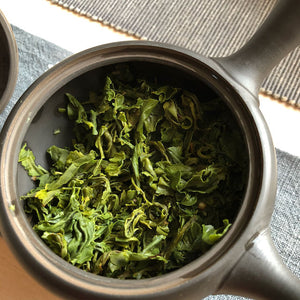


Kamairicha Tokusen — Issin-en (Miyazaki) • artisanal, pan-roasted green tea
Issin-en (一心園) is a family farm that cultivates its organic plantations in the Hinokage area of the mountainous Miyazaki Prefecture on the island of Kyūshū. Their main profile is kamairicha – a traditional Japanese green tea roasted in a pan – which is a rarity in Japan and a specialty of the southern regions (Miyazaki in particular). The Tokusen (“special selection”) batch is fragrant, round and clean in the mouth, with low bitterness and a long sweet finish.
Origin & style
- Region: Hinokage, Nishi-Usuki, Miyazaki – steep, mountainous plots.
- Producer: Issin-en (Kai family) – organically grown, without pesticides or artificial fertilizers.
- Style: kamairicha – pan-roasting (kama) instead of steaming, which gives the leaves their slightly curved, “comma” shape and nutty-toasted aromas.
Processing in brief
Freshly picked in spring, the leaves are heated in a high-temperature iron pot ( kama ) for green enzymatic “fixation,” followed by gentle twisting and drying. The hand-controlled temperature and time give Tokusen its round, clean, low-bitter style.
Flavor profile
- Aroma: toasted grain, roasted soy, slight caramel-honey tone.
- Taste: nutty, bready, with delicate green-spicy layers; silky body and clean balance.
- Finish: long, sweet, clean, with minimal astringency.
Recommended preparation
Japanese (kyusu) method
- 5 g tea / 200 ml soft water
- 80–85°C
- 1st pour: 60–90 sec • 2nd: 20–30 sec • 3rd: 45–60 sec
Western method
- 3g / 250ml
- 80–85 °C, 1.5–2 minutes
- Second pour: +30–40 sec.
Cold brew / cold soak
- 8–10 g / 1 liter
- Refrigerate for 6–8 hours
- Result: a clean, nutty-toasted, coolly sweet cup, almost completely free of bitterness.
Pairing & occasion
- Roasted seeds, lightly smoked cheeses, savory pies, light chocolates.
- For an afternoon relaxation or a caffeine-free evening tea.
Note: Kamairicha is sensitive to too high a temperature – it is recommended to set it between 80–85 °C and work with soft (low TDS) water.
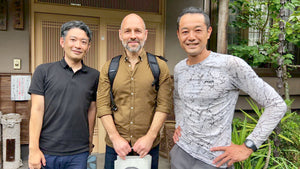
Personal contact
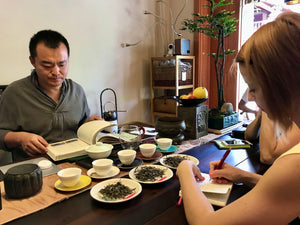
Our teas don't come from wholesale warehouses or unknown sources. We travel to the small producers we source from – whether it's a Japanese family tea garden, a Chinese mountain village or an oolong maker in Taiwan.
Stories
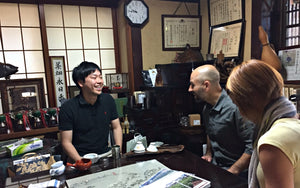
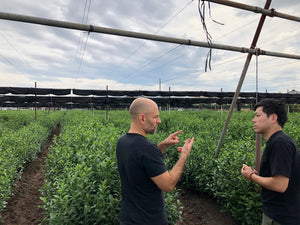
We meet them in person, learn their story, see how they care for their plants, and how they process the fresh leaves.
These experiences are the soul of our teas. This way, not only is the quality guaranteed, but also the fact that behind each cup there is a real person, a real story.
Direct
This direct relationship is valuable to us. Not only because of the excellent tea, but because we believe that trust, respect and personal presence are what make the tea drinking experience truly special.
Teavolution Tea Blog

Shincha - Japan's First Tea of Spring
Read more

What is shading in Japanese tea? | Matcha, Gyokuro, Kabusecha
Read more

Oct 2, 2025
Sencha tea
Read more
Sep 21, 2025
Matcha shortage in Japan
Read more
Mar 18, 2025
Puer tea, puerh or pu-erh
Read more
Mar 18, 2025
Types of tea
Read more
