


Jingmai 'nutty' shu puer is a lighter (mild-medium) fermented shu puer that delicately crosses genre boundaries :-): it retains the soft, caressing sweetness and velvety texture of shu puer, while the cup often brings a nutty, fruity, "sheng-like" fresh sensation. If you're looking for a cleaner, more elegant experience instead of very dark, "oily-black" shus, you've come to the right place.
Origin & Production
- Raw material: Spring 2025 leaves from natural tea gardens (Jingmai).
- Fermentation: June 2025, immediately after maocha production.
- Batch: from a small producer, with a specifically "gentler" fermentation approach, aiming for an aged sheng puer character.
The character of the fermentation is moderately light: the wet leaves look "more maocha-like," less "decomposed," and the cup doesn't overwhelm you like a cellar door – instead, it gently opens and keeps things clear.
What does this mean in practice? A thicker, more active mouthfeel (a rarer treasure in shu), but the tea doesn't aim for infinite endurance: about 5 truly strong infusions are realistic in gongfu – in return, each infusion is pleasant and well-rounded. It can be extended further with longer steeping or boiling.
Flavor Profile – What to Expect?
- Texture: light, fruity, nutty sip, lively sensation in the mouth.
- Main notes: soft sweetness + fruitiness (more towards dried fruit).
- Subtle details: sweet-spicy nuances (e.g., licorice), dried plum impressions, a hint of salty-umami nuttiness.
- Aftertaste: refreshing, slightly "cooler" mouthfeel, sometimes reminiscent of a sheng character.
- Interestingly, this shu consists of lighter-colored leaves and is perhaps "halfway" between sheng and shu – making it particularly exciting for those who love the freshness of sheng.
- clean, pleasant fermentation character, and definitely not the "fishy-mushroomy" line.
- The tea color is reddish-brown, a refreshing sight.
Preparation
1) Asian / Gongfu (recommended)
- Dose: 5–7 g / 100–120 ml
- Water: 95–100 °C
- Rinse: 1 quick rinse (5–10 sec), then pour off immediately.
- Infusions: start with 10–15 sec, then gradually increase (15–20–25… sec)
The leaves open easily, so short infusions provide the most beautiful, cleanest curve – it's worth treating it with "sheng logic" in this style.
2) Western (larger tea brewing vessel)
- Dose: 3–4 g / 300 ml
- Water: 95–100 °C
- Steeping: 3–4 minutes (if you prefer it lighter: 2:30)
- Re-steeping: 1–2 times still works well, with a slightly longer time

Personal contact
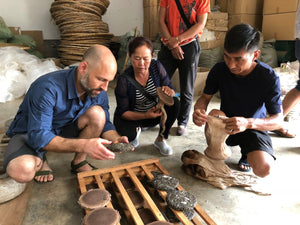
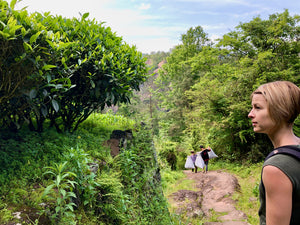
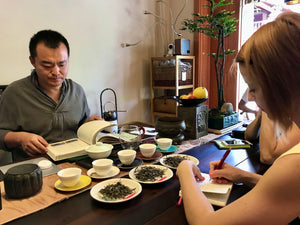
Our teas don't come from wholesale warehouses or unknown sources. We travel to the small producers we source from – whether it's a Japanese family tea garden, a Chinese mountain village or an oolong maker in Taiwan.
Stories
We meet them in person, learn their story, see how they care for their plants, and how they process the fresh leaves.
These experiences are the soul of our teas. This way, not only is the quality guaranteed, but also the fact that behind each cup there is a real person, a real story.
Direct
This direct relationship is valuable to us. Not only because of the excellent tea, but because we believe that trust, respect and personal presence are what make the tea drinking experience truly special.
Teavolution Tea Blog

Shincha - Japan's First Tea of Spring
Read more

What is shading in Japanese tea? | Matcha, Gyokuro, Kabusecha
Read more

Oct 2, 2025
Sencha tea
Read more
Sep 21, 2025
Matcha shortage in Japan
Read more
Mar 18, 2025
Puer tea, puerh or pu-erh
Read more
Mar 18, 2025
Types of tea
Read more
