


Jingmai Gushu - 'Six Garden Harmony' - 2023 sheng puer
The world of Jingmai Mountain puer is not necessarily among the most popular – rather, it leaves a deep and long-lasting impression once you taste it.
The Six Garden Harmony is a clear example of this approach: a sheng that is meant for long tea drinking, allowing it time to continuously unfold.
The ancient tea gardens and villages of Jingmai Mountain are UNESCO World Heritage Sites – part of a thousand-year-old tea-growing tradition.
Six gardens, one character
The batch is a carefully constructed blend of six Jingmai garden leaves: Nuo Gu Wan , Mai Sao Kan , Ai Ban , Weng Bo , He Huan and Mang Guo .
This combination gives the feeling of “harmony”: it is not extreme, yet it is definitely present.
The year 2023 was drier in Jingmai, resulting in lower yields; the tea maker had to collect leaves from multiple growers to create this tea.
The lower leaf yield resulted in more concentrated flavors and more intense tea strength.
Flavor profile – what to expect in your cup?
- Aroma: wildflowers, fresh hay, light honey
- Sip: young sheng freshness, delicate, subdued herbal bitterness
- Extra layer: slight citrus edge and “herb garden” associations (e.g. basil/mint character)
- Mouthfeel: smooth, fuller body, sits nicely on the palate :-)
- Huigan (returning sweetness): very clean, long aftertaste
This tea is typically the kind that builds from sip to sip , and in the end you realize how long it stays with you.
Preparation – 3 methods
1) Gongfu (recommended)
- Tea: 5g/100ml
- Water: 95–100 °C
- Rinse: 5–8 sec (optional if pressing is tight)
- 1st–3rd cast: 8–12 sec
- Additional casts: gradually lengthen (+5–10 sec)
2) Western (jug/mug)
- Tea: 2.5–3 g/250 ml
- Water: 90–95 °C
- Soaking: 2.5–4 minutes
- 2nd pour: 4–6 minutes
Storage and maturation
Keep it in a dry, cool, odor-free place. Sheng puer usually ages nicely: the freshness becomes more refined, the aftertaste returns even clearer and deeper. If you have the patience, it is worth “setting aside” a disc – this item is particularly grateful for time.

Personal contact
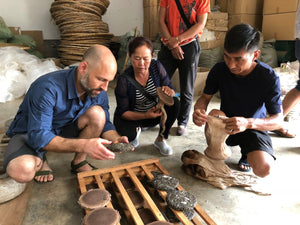
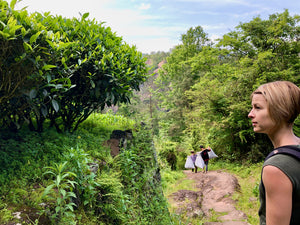
Our teas don't come from wholesale warehouses or unknown sources. We travel to the small producers we source from – whether it's a Japanese family tea garden, a Chinese mountain village or an oolong maker in Taiwan.
Stories
We meet them in person, learn their story, see how they care for their plants, and how they process the fresh leaves.
These experiences are the soul of our teas. This way, not only is the quality guaranteed, but also the fact that behind each cup there is a real person, a real story.
Direct
This direct relationship is valuable to us. Not only because of the excellent tea, but because we believe that trust, respect and personal presence are what make the tea drinking experience truly special.
Teavolution Tea Blog

Shincha - Japan's First Tea of Spring
Read more

What is shading in Japanese tea? | Matcha, Gyokuro, Kabusecha
Read more

Oct 2, 2025
Sencha tea
Read more

Sep 21, 2025
Matcha shortage in Japan
Read more
Mar 18, 2025
Puer tea, puerh or pu-erh
Read more
Mar 18, 2025
Types of tea
Read more
