


Houjicha “Oya to ko” — Shichimeien, Uji • “parent and child”
Bringing the silence of the Uji Valley: houjicha is a roasted green tea in which the leaves and stems are gently roasted, giving them a nutty, toasted grain, caramel aroma. The specialty of the selection called Oya to ko (“parent and child”) is that last year’s nutrient-rich leaves ( parent ) and this year’s fresh buds ( child ) are harvested together , so the cup is both full and fresh, clean and round.
Origin & style
- Region: Uji, Kyoto – the historical center of Japanese tea culture.
- Maker: Horii Shichimeien (founded 1879), the custodian of the tradition of preserving the "Seven Famous Uji Tea Gardens".
- Style: medium-deep roast houjicha , everyday, clean flavor profile.
Processing in brief
The raw material is a mixture of the previous year's leaves and this year's buds; after wilting, the leaves and finer stem parts are roasted slowly and evenly to bring out the nutty, toasted notes and smooth, clean taste.
Flavor profile
- Aroma: toasted grain, nuts, light caramel and roasted sesame seeds.
- Taste: smooth, clean and round; nutty-malty, hints of brown sugar and roasted barley.
- Finish: dry, clean, warm and soothing, with a slight mineral freshness.
Recommended preparation
Japanese (kyusu) method
- 5–6 g / 200 ml soft water
- 90–95°C
- 1st pour: 45–60 sec • 2nd: 20–30 sec • 3rd: 45–60 sec
Western method
- 3g / 250–300ml
- 90–95 °C, 2–3 minutes
- Second pour: +30–45 sec.
Cold brew / cold soak
- 8–10 g / 1 liter
- Refrigerate for 6–8 hours
- Result: a silky, toasty-nutty, refreshingly clean cup.
Things to know
- Packaging (manufacturer's): 100 g
- Preparation guidelines (producers): "For 2 people" approx. 12 g tea / serving for houjicha.
- Shelf life (manufacturer's): ~6 months from production.
- The tea is also suitable for making kombucha, a really pleasant fermented drink.
Pairing & occasion
- Buttery-nutty cookies, savory pies, lightly smoked cheeses.
- For evening relaxation, for communal tea drinking – when you need a "taste of home" in your cup.
Note: The proportions are starting points; you may want to fine-tune them according to water, equipment, and taste.

Personal contact
Our teas don't come from wholesale warehouses or unknown sources. We travel to the small producers we source from – whether it's a Japanese family tea garden, a Chinese mountain village or an oolong maker in Taiwan.
Stories
We meet them in person, learn their story, see how they care for their plants, and how they process the fresh leaves.
These experiences are the soul of our teas. This way, not only is the quality guaranteed, but also the fact that behind each cup there is a real person, a real story.

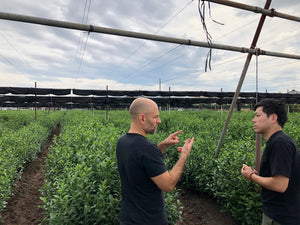
Direct
This direct relationship is valuable to us. Not only because of the excellent tea, but because we believe that trust, respect and personal presence are what make the tea drinking experience truly special.
Teavolution Tea Blog

Shincha - Japan's First Tea of Spring
Read more

What is shading in Japanese tea? | Matcha, Gyokuro, Kabusecha
Read more

Oct 2, 2025
Sencha tea
Read more

Sep 21, 2025
Matcha shortage in Japan
Read more
Mar 18, 2025
Puer tea, puerh or pu-erh
Read more
Mar 18, 2025
Types of tea
Read more
