
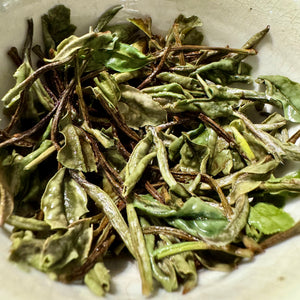


Gong Mei (贡眉) , or “donation eyebrow” tea, is a traditional version of Chinese white tea, following Bai Mu Dan in the hierarchy of white teas. However, this does not mean less – in fact! In addition to the buds of Gong Mei, more developed leaves also appear, so the taste is fuller, deeper and more structured than in the case of Silver Needle or Bai Mu Dan.
Originating from Fujian Province, often around Zhenghe or Fuding, the tea undergoes careful, light oxidation and natural drying, which preserves the clean character of white teas, while also bringing in slight aged tones. In good quality Gong Mei teas, slight woody, honeyed, and even plum or dried fruit notes can be detected.
An excellent choice for those who desire a deeper, more substantial taste experience in the world of white teas.
Flavor profile
-
Aroma: surprisingly floral, reminiscent of dried fruits and honey
-
Taste: soft but full-bodied; honeyed, fruity, with delicately woody and aged notes
-
Finish: long-lasting, slightly sweet-sour aftertaste
Recommended preparation
Asian style (gaiwan or small glass jug)
For the full spectrum of flavors
-
Tea quantity: 5–6 g for 100–120 ml of water
-
Water temperature: 90–95°C
-
Flushing: first flush (starting 20–30 seconds after awakening, gradually increasing
-
Can be refilled multiple times: up to 6-8 times
Western style (teacup or larger pot)
Soft, harmonious flow
-
Tea quantity: 3 g for 250 ml of water
-
Water temperature: 85–90°C
-
Soaking time: 2.5–3 minutes
-
Can be refilled multiple times: 2–3 times
Cold brew
A refreshing, slightly sweet version for hot days
-
Tea quantity: 6–7 g for 750 ml of cold, filtered water
-
Soaking time: 10–12 hours in the refrigerator
-
Tip: Shake or stir carefully before consumption.

Personal contact
Our teas don't come from wholesale warehouses or unknown sources. We travel to the small producers we source from – whether it's a Japanese family tea garden, a Chinese mountain village or an oolong maker in Taiwan.
Stories
We meet them in person, learn their story, see how they care for their plants, and how they process the fresh leaves.
These experiences are the soul of our teas. This way, not only is the quality guaranteed, but also the fact that behind each cup there is a real person, a real story.
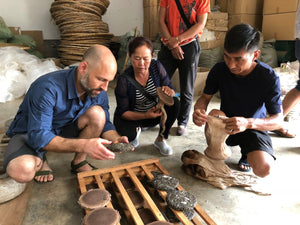

Direct
This direct relationship is valuable to us. Not only because of the excellent tea, but because we believe that trust, respect and personal presence are what make the tea drinking experience truly special.
Teavolution Tea Blog

Shincha - Japan's First Tea of Spring
Read more

What is shading in Japanese tea? | Matcha, Gyokuro, Kabusecha
Read more

Oct 2, 2025
Sencha tea
Read more

Sep 21, 2025
Matcha shortage in Japan
Read more
Mar 18, 2025
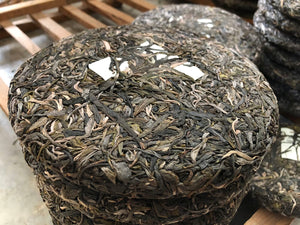
Puer tea, puerh or pu-erh
Read more
Mar 18, 2025
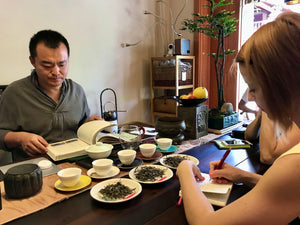
Types of tea
Read more
