
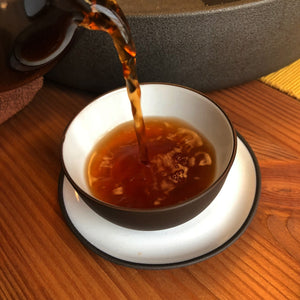


Yunnan, China – shu puer from the Dayi (Menghai Tea Factory) selection. The Yun Ding batch is a 2010 vintage that has matured over the years, showing a clean and easy-drinking character, a truly spicy and deep tea.
Processing
It is made using wet fermentation (wo dui) and then aged for years. Careful fermentation and proper post-maturation give it a smooth, round mouthfeel and a clean aftertaste – without any intrusive, “raw” fermentation notes.
Flavor profile
The opening of the sip is soft and sweet: cocoa , date and slightly molasses notes lead. In the middle, a delicate cedar-woody tone and a hint of licorice appear, the body is dense, yet clear. The finish is long and silky, free of bitterness.
Flavor profile – breakdown
- Aroma: cocoa powder, sweet earth, cedar.
- Body: medium full → full, silky texture.
- Flavors: dates, cocoa, light licorice, soft woody notes.
- Finish: long, smooth, with sweet tones.
- Sensory impression: very clean, soothing “comfort cup”.
Preparation instructions
Asian (clay pot – gong fu)
- Tea/water: 6 g/100 ml
- Water temperature: 98–100 °C
- Rinse: 1 quick (3–5 sec) rinse optional.
- Soaks: 1. 10–12 sec → 2. 12–15 sec → 3. 18–20 sec, then gradually increase (in 5–10 sec increments). 8–10 pours is realistic.
- Tip: if you are using a more compact press, let it “warm up” for 1–2 minutes after rinsing for a cleaner, rounder cup.
West
- Tea/water: 3g/300ml
- Water temperature: 98–100 °C
- Soaking: 3–4 minutes
- Re-soak: 1× 5–6 minutes (still stays clean and sweet).

Personal contact
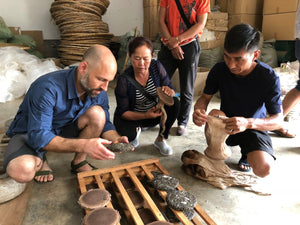
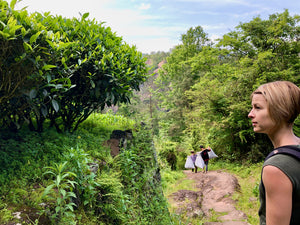
Our teas don't come from wholesale warehouses or unknown sources. We travel to the small producers we source from – whether it's a Japanese family tea garden, a Chinese mountain village or an oolong maker in Taiwan.
Stories
We meet them in person, learn their story, see how they care for their plants, and how they process the fresh leaves.
These experiences are the soul of our teas. This way, not only is the quality guaranteed, but also the fact that behind each cup there is a real person, a real story.
Direct
This direct relationship is valuable to us. Not only because of the excellent tea, but because we believe that trust, respect and personal presence are what make the tea drinking experience truly special.
Teavolution Tea Blog

What is shading in Japanese tea? | Matcha, Gyokuro, Kabusecha
Read more

Oct 2, 2025
Sencha tea
Read more

Sep 21, 2025
Matcha shortage in Japan
Read more
Mar 18, 2025
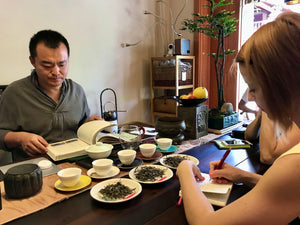
Puer tea, puerh or pu-erh
Read more
Mar 18, 2025
Types of tea
Read more
Mar 18, 2025
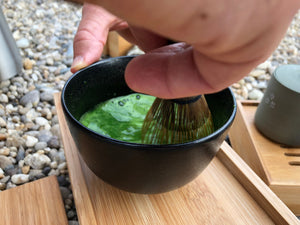
What is matcha tea?
Read more
